Lodge and track an application
The City of Mandurah Online portal is the main way to lodge, track and pay for applications.
Whether you're replacing an old fence, building a new one or dealing with a dispute with a neighbour, there are rules about what you can build and where. This page covers what you need to know.
Do I need approval?
Development (planning) approval: May be required depending on your property's zoning, location and the type of fence proposed. Contact a planning officer to confirm before you start.
Building permit: Not required if your fence is built in accordance with the City's Fencing Local Law. A building permit is required for electrified fences and fences containing barbed or razor wire (except on rural lots).
If your property is on a canal or is rural or rural-residential, different rules apply - see the relevant sections below.
Fencing requirements
This section applies to standard residential properties. If your property is rural or rural-residential, see the specific sections below.
How high can my fence be?
What materials can I use?
Brick, stone, timber, steel railings and brushwood are all acceptable. Corrugated fibre-cement sheeting and solid metal panels are generally not acceptable.
Driveways and corners
To keep drivers safe, your fence must be no higher than 750mm within 1.5m of your driveway or a street corner. Your fence and gates must not extend into the road or verge.
Does my fence need gaps?
Under the Residential Design Codes (R‑Codes), any section of a fence that is higher than 1.2 metres must be visually permeable. This means it needs gaps so people can see through it (for example, slats, rails or open panels).
A fence will meet the R‑Codes if one of the following standards is achieved:
Minimum one‑third open area:
Continuous vertical or horizontal gaps 50 mm wide or more, making up at least ⅓ of the total fence surface area.
Minimum one‑half open area:
Continuous vertical or horizontal gaps less than 50 mm wide, but together making up at least ½ of the total fence surface area.
Equivalent visibility:
A different fence design that provides the same level of visibility (or less obstruction) as the above options.

This section applies to standard residential properties (R10 and above). If your property is on a canal or is rural or rural-residential, see the specific sections below.
A standard side or rear fence must be between 1.6m and 2.0m in height and can be constructed from timber, fibre cement, masonry (brick, stone or concrete), metal panel (such as Colorbond) or PVC panel.
Pre-used materials can only be used if they are structurally sound and painted or treated to the City's satisfaction.
All swimming pools and spas (including portable pools) that hold water more than 30cm deep must have a safety barrier to help prevent young children from drowning. This is a legal requirement under the Building Regulations 2012.
Your safety barrier must restrict access to the pool from the street, adjoining properties and all habitable buildings.
Key things to know:
Pool in your front yard? If your pool is located in the front setback area, your safety barrier must also comply with the City's front fence requirements. See the Front fences section above for details.
If your property abuts a canal, specific fencing rules apply in addition to the standard residential requirements.
Front (street) fences
Your front fence may include solid infill panels, provided:
Fencing near the canal
Any fence located within 4m (or 6m for Port Mandurah Stage 1 and Waterside Estates) of the canal wall must meet the same standards as fences in a street setback area — meaning it must be visually permeable above 1.2m and no higher than 1.8m.
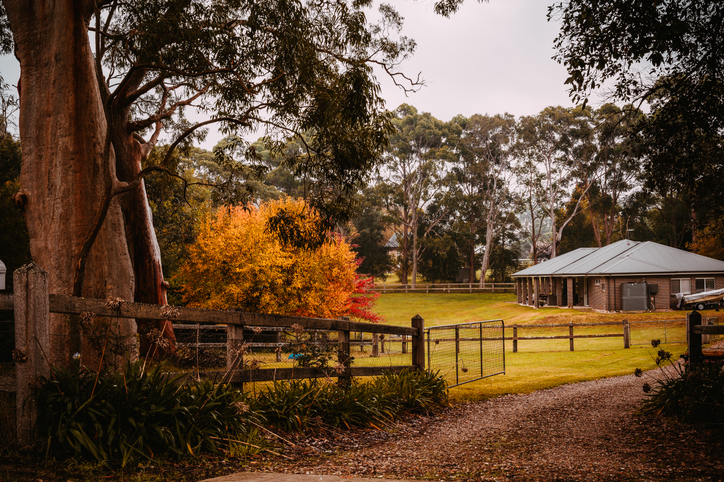
If your property is zoned rural or rural-residential, different fencing standards apply across your entire property.
Fences must be post and wire or post and rail construction, between 1.0m and 1.4m in height, using the following specifications:
Post and wire
Post and rail
Barbed wire is permitted on rural lots, provided it is fixed to the side of fence posts furthest from any public space or thoroughfare.
Screening (such as shade cloth) may not be attached to fences on rural or rural-residential lots.
Contact a planning officer if you're unsure what applies to your property.
A dividing fence is a fence that separates two properties, whether on the common boundary or elsewhere.
If you want to build or replace a dividing fence, you should talk to your neighbour first. Under the Dividing Fences Act 1961, owners of adjoining properties generally share the cost of a sufficient dividing fence.
If you and your neighbour can't reach an agreement, the matter can be referred to the Magistrates Court. The City is not involved in private disputes between neighbours about dividing fences.
The following materials are restricted or prohibited:
Still not sure? Contact the City's planning or building teams before you start.
Useful documents
The City of Mandurah Online portal is the main way to lodge, track and pay for applications.
Planning policies and frameworks that guide development across the City.
Information tailored to rural and rural‑residential landowners and property requirements.